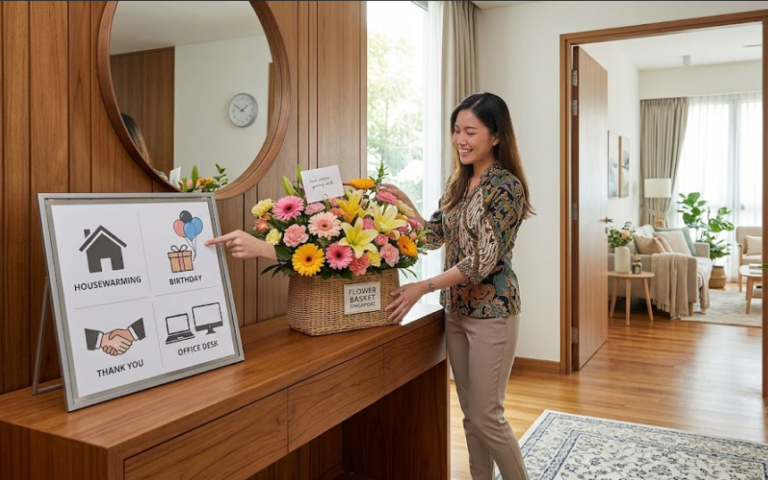
A reception counter with fresh flowers can look impressive at 9am and tired by late afternoon. That is often the real turning point for buyers considering long lasting botanical decor. In commercial spaces, show units, hospitality settings and premium gifting, visual impact matters, but so do maintenance hours, replacement cycles and consistency. Preserved botanical solutions sit in that practical middle ground – natural in appearance, far longer lasting than fresh material, and easier to manage than many people expect.
For buyers in Singapore and Southeast Asia, that balance is especially useful. Humidity, air-conditioning, event turnaround times and labour costs all affect decorative planning. Whether the project is a hotel lobby arrangement, a preserved moss wall for an office, styling for a property launch or a housewarming gift that needs to stay presentable beyond the first week, choosing the right botanical format can reduce waste and improve long-term value.
What long lasting botanical decor actually means
Long lasting botanical decor usually refers to preserved flowers, preserved foliage, preserved moss and preserved trees that have been specially treated to retain their appearance and flexibility. Unlike artificial plants, these materials begin as real botanicals. Unlike dried flowers, they are generally processed to better preserve texture and colour.
That difference matters in professional applications. Preserved greenery often gives a softer, more natural finish than imitation foliage, particularly in close-view settings such as reception desks, dining areas, lift lobbies or client gifting. It also avoids the short display life of fresh flowers, which can be difficult to justify when a space needs to look consistently polished every day.
There are trade-offs, of course. Preserved botanicals are not suitable for outdoor exposure, heavy moisture or direct sun over long periods. They are best seen as an indoor decorative solution where stability, natural character and reduced upkeep are priorities.
Why businesses are choosing long lasting botanical decor
Commercial buyers rarely choose preserved botanicals for looks alone. They choose them because the numbers and operations often make sense.
Hotels and restaurants use them to maintain atmosphere without daily floral replacement. Interior designers specify them where clients want greenery but do not want the maintenance burden of live plants. Property sales teams use them for show flats, gifting and staging because they photograph well and remain presentable over an extended campaign period. Florists and event stylists use them when installations need to last beyond a single event or when repeatable design consistency is important.
In many cases, the value is in predictability. Fresh flowers can be beautiful but variable. Live plants can thrive in one corner and struggle in another. Preserved material gives more control over colour, shape and lifespan, which is useful when design standards need to be maintained across multiple locations or clients.
Best uses for preserved botanical solutions
Not every application calls for the same material. A small gift arrangement has different demands from a feature wall in a hospitality setting, and understanding those differences helps buyers avoid costly mistakes.
Reception areas and office styling
Preserved foliage arrangements, moss art and compact greenery displays work well in offices because they soften corporate interiors without requiring regular watering or gardening visits. This is particularly useful in air-conditioned environments where some live plants may struggle. For front-of-house spaces, the key is proportion. Oversized pieces can feel static, while smaller, well-placed pieces tend to look more intentional and easier to refresh seasonally.
Hotels, restaurants and hospitality venues
Hospitality projects usually need visual warmth with minimal operational disruption. Preserved trees, table arrangements and wall-mounted botanical features are often chosen for this reason. They help create a finished environment without adding daily floral management to already busy teams.
That said, placement matters. In restaurants, pieces should be kept away from steam-heavy zones and direct heat. In hotels, lobby arrangements need to be scaled for viewing distance. What looks detailed up close may disappear visually in a large double-volume space.
Property styling and premium gifting
For property professionals, long lasting botanical decor has a second advantage beyond aesthetics – longevity after handover. A preserved arrangement or botanical gift feels more premium than a conventional hamper insert and has a stronger chance of remaining in the client’s home or office for months rather than days.
This makes it suitable for housewarming gifts, client appreciation pieces and show unit styling. Buyers looking for gifting options often benefit from simpler forms with stable colour palettes. Designs that are too trend-led can date quickly, while neutral preserved greenery and moss-based pieces tend to fit more interiors.
Retail, events and display installations
For activations, window displays and event backdrops, preserved botanicals can support a more sustainable production cycle when parts of the installation are intended for reuse. Florists and stylists often appreciate this because it extends the working life of selected materials across multiple jobs.
Still, it depends on the event type. If the brief is highly scent-led or centred on the freshness of seasonal blooms, preserved products may not replace fresh flowers fully. In many projects, the strongest result comes from using preserved material strategically rather than forcing it into every element.
Choosing the right materials
Buyers often group all preserved products together, but performance varies by category. Preserved moss is excellent for framed art, wall features and low-maintenance greenery surfaces. Preserved foliage offers volume and texture for arrangements, planters and installations. Preserved flowers provide focal points and premium detail, especially in gifting and decorative accents. Preserved trees suit larger-format commercial interiors where visual impact is needed without ongoing horticultural care.
Colour selection should also be approached commercially. Brighter tones can create strong first impressions, but natural greens, muted neutrals and restrained accents tend to deliver longer design life. This matters for hospitality and office projects where décor may need to stay relevant for many months or years.
There is also a supply consideration. Businesses handling repeat rollouts, multi-site projects or client gifting programmes usually benefit from working with materials that can be sourced consistently. A one-off design may allow for rarity, but ongoing programmes require continuity.
What buyers should ask before ordering
A good botanical brief is not just about appearance. It should cover environment, display duration, handling and maintenance expectations.
Start with the location. Is the piece going into a cool, dry office, a sunlit show flat, a humid entrance zone or a busy restaurant? Preserved materials perform best indoors away from direct sunlight, water and strong airflow. Next, consider viewing distance. A feature arrangement seen from three metres away needs different texture and scale from a desktop piece seen at arm’s length.
It is also worth asking how much handling the décor will receive. In public-facing spaces, touch points and frequent movement can shorten the life of delicate elements. For this reason, sturdier preserved foliage compositions may be more suitable than intricate flower-heavy designs in high-traffic areas.
Commercial buyers should also ask about cleaning and care. Preserved décor is low maintenance, not no maintenance. Dust management, sheltered placement and sensible handling all make a difference to display life.
Care and lifespan in real conditions
One reason preserved botanicals appeal to businesses is that upkeep is straightforward. They do not need watering, pruning or fertilising. However, they do need the right conditions. Direct sunlight can fade colour. Excess humidity can affect texture over time. Water should be avoided entirely.
In practical terms, this means preserved décor performs best indoors in stable conditions. Light dusting is usually enough. In projects where décor is changed seasonally, pieces can often be rotated or stored more easily than live plant schemes.
Lifespan varies depending on product type, placement and handling. Some pieces remain visually strong for years, while others may show wear earlier in harsher locations. That is why experienced specification matters. The same preserved arrangement can perform very differently in a cool boardroom versus a bright window display.
A smart fit for florists and designers
For florists, home-based floral businesses and designers, preserved botanicals are not just a finished product category. They are also a design tool. They make it possible to offer longer-lasting arrangements, premium add-on gifting, workshop formats and interior styling services without being tied entirely to the perishability of fresh flowers.
This is particularly relevant in Singapore, where space, labour and turnaround speed influence how floral businesses operate. A dependable source of preserved foliage, moss, flowers and sundries helps smaller studios and larger commercial teams alike maintain flexibility across gifting, styling and décor work. That is part of why specialist suppliers such as GiftsN remain relevant to both trade buyers and project-based clients.
Long lasting botanical decor works best when it is chosen for the right reasons. Not because it replaces every fresh floral moment, but because it solves a different commercial problem with calm efficiency. If the goal is natural-looking décor that holds its shape, supports brand presentation and reduces maintenance pressure, preserved botanical solutions are often the more sensible choice.